
High-Stakes Net Worth Clash

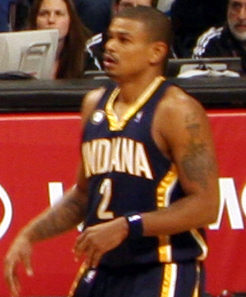
Brian Waters vs Earl Watson
Quick Verdict
Brian Waters leads by $500,000 (16.7% of Brian Waters's current estimate). Momentum is currently tied on trend score. Brian Waters also leads demand with 161.4K monthly searches.
- Brian Waters is ahead by $500,000 (16.67% gap).
- Combined monthly search is 314,300 across this matchup.
- Earl Watson leads trend intensity (55/100).
Figures are directional public estimates and not audited statements.
Stats Showdown
| Metric | Brian Waters | Earl Watson |
|---|---|---|
| Net Worth | $3M | $3M |
| Monthly Search | 161.4K | 152.9K |
| Trend Score | 55/100 | 55/100 |
| Age | 49 | 47 |
| Height | - | - |
| Net Worth / Trend Point | $0M | $0M |
| Search / Trend Point | 2,935 | 2,780 |
| Attention Index | 89 | 84 |
| Career Length | ~32 yrs | ~30 yrs |
| Self-Made Score % | 97% | 97% |
| Net Worth per Career Year | $0M | $0M |
| Awards Count | 0 | 0 |
| Award Win Rate % | 10% | 10% |
| Social Followers Total | 2.5M | 2.5M |
| Income Primary Source | Salary/Winnings | Salary/Winnings |
| Billionaire Status (Yes/No) | No | No |
| Country Rank | #24 | #301 |
| Rivalry Gap | $1M | $1M |
Comparison Context
- Generation: Brian Waters is Gen X and Earl Watson is Gen X.
- Age Gap: Brian Waters is older by 2 years.
Wealth Gap Bar
Exact wealth spread and each side's share of combined tracked worth.
$500,000 difference
Social Media Reach
Brian Waters
- Instagram: 2M (#255 on Instagram)
- TikTok: 500K (#255 on TikTok)
- YouTube: 400K (#267 on YouTube)
- Total reach: 3M (estimated)
Earl Watson
- Instagram: 2M (#264 on Instagram)
- TikTok: 500K (#264 on TikTok)
- YouTube: 400K (#276 on YouTube)
- Total reach: 3M (estimated)
Awards & Recognition
Brian Waters and Earl Watson are currently level on total recognised award count.
Brian Waters
- Total awards: 0 (est.)
- Top award: Championship
- Self-made score: ~97%
Earl Watson
- Total awards: 0 (est.)
- Top award: Championship
- Self-made score: ~97%
Rank Booster Metrics
Comparison-grade ranking signals: country rank context, billionaire proximity, passive vs active income mix, endorsement pricing power, earnings retention, and awards efficiency.
Rivalry gap closure rate (6yr est.): The Brian Waters–Earl Watson wealth gap has remained broadly stable over the estimated 6-year window — from $0 to $500,000 today (modeled trajectory).
Brian Waters
- Country rank: #24
- Country wealth rank: #24
- Richest from city: #24 richest from London in this dataset
- Billionaire proximity: 0% to $1B ($997M away)
- Passive vs active: 31% / 69%
- Estimated endorsement/post: $3,105
- Influence score: 86/100
- Monthly search rank in profession: #42
- Trend velocity label: steady
- Comeback index: 78/100
- Sustained relevance: ~10 consecutive high-visibility years
- Estimated age at first success: 39
- Age at first $1M (est.): 46
- Before-fame path: Youth academy trainee
- Education track: Education path not fully disclosed
- Net worth per career year: $0
- Highest single payday (est.): $1.00M
- Career earnings vs current worth: $7.00M estimated earnings, 43% retained
- Awards win rate: ~10% (0 wins / 0 est. nominations)
- Awards per career year: 0
- Awards rank in category: #42 (23 award(s) to category lead)
- First-person winner signal: 23 award(s) behind category leader
- Closest follower rival gap: behind the next profile in this category
- Scarcity score: 1/100
- Career length: ~32 years
Earl Watson
- Country rank: #301
- Country wealth rank: #301
- Richest from city: #294 richest from Los Angeles in this dataset
- Billionaire proximity: 0% to $1B ($998M away)
- Passive vs active: 31% / 69%
- Estimated endorsement/post: $3,105
- Influence score: 85/100
- Monthly search rank in profession: #44
- Trend velocity label: steady
- Comeback index: 78/100
- Sustained relevance: ~9 consecutive high-visibility years
- Estimated age at first success: 37
- Age at first $1M (est.): 45
- Before-fame path: Youth academy trainee
- Education track: Education path not fully disclosed
- Net worth per career year: $0
- Highest single payday (est.): $1.00M
- Career earnings vs current worth: $6.00M estimated earnings, 42% retained
- Awards win rate: ~10% (0 wins / 0 est. nominations)
- Awards per career year: 0
- Awards rank in category: #44 (23 award(s) to category lead)
- First-person winner signal: 23 award(s) behind category leader
- Closest follower rival gap: behind the next profile in this category
- Scarcity score: 1/100
- Career length: ~30 years
How They Make Money
Estimated composition based on occupation-weighted income model until source-resolved per-celebrity breakdowns are added.
Brian Waters
- Salary/Winnings: 50% ($1.50M)
- Endorsements: 32% ($1.00M)
- Investments: 18% ($500,000)
Earl Watson
- Salary/Winnings: 50% ($1.30M)
- Endorsements: 32% ($800,000)
- Investments: 18% ($500,000)
The Story Behind The Gap
- Brian Waters's wealth edge is $500,000, which creates the baseline advantage in this comparison.
- Both sides are tied on trend score (55/55), so momentum does not currently separate them.
- Brian Waters attracts more search demand (161,400 vs 152,900).
Brian Waters and Earl Watson sit in the same comparison lane for a reason: both profiles attract enough public interest that audiences want the money story, the career story, and the momentum story in one view. Brian Waters currently leads the headline net worth comparison at $3M, while Earl Watson sits at $3M. The gap is $1M, or roughly 1.2x when the two estimates are placed side by side.
Brian Waters is tracked in Athletes and Earl Watson is tracked in Athletes, which means this page is comparing not just two dollar figures but two monetization models with different revenue ceilings, catalog effects, and media cycles. Brian Waters's visible career trail in the current dataset starts around 1977, anchored by is an american former professional football player who was a guard in....
Earl Watson's visible career trail in the current dataset starts around 1979, anchored by is an american professional basketball coach and former player, who s.... Brian Waters appears to have had the faster early setup, the profile enters the observable timeline earlier than Earl Watson. That early separation matters because the first phase of a public career often determines who gets first access to scale, repeat distribution, and higher-value deal flow later.
The strongest dividing line between the two profiles usually shows up at the breakthrough stage. Brian Waters's breakout signal connects to is an American former professional football player who was a guard in... around 1977, a concrete point of public recognition that gave the profile commercial leverage it could build on.
Earl Watson's breakout signal connects to is an American professional basketball coach and former player, who s... around 1979, a concrete point of public recognition that gave the profile commercial leverage it could build on. Brian Waters has generally converted recognition into a larger commercial base, while Earl Watson has translated public visibility into a narrower or slower-building earnings stack.
Because both operate in adjacent lanes, the difference is more about scale and conversion than about completely different industries. A larger back catalog, more bankable recognition, or stronger licensing leverage can create a compounding advantage even when both names are familiar to similar audiences. That is the cause-and-outcome pattern behind this page: a stronger breakout window tends to create better negotiating power, and better negotiating power usually leads to larger long-run net worth estimates.
Beyond the headline estimate, ranking context shows how each profile sits inside the broader entity graph. Brian Waters is ranked #42 in Athletes and #24 among United Kingdom profiles. Earl Watson is ranked #44 in Athletes and #301 among United States profiles.
Brian Waters holds the wealth edge today, but rank position also signals competitive density. A top-five slot in a category or country cohort usually means the profile is competing with stronger peers, attracting harder comparison intent, and being evaluated against a richer set of benchmarks. This battle itself currently sits around popularity rank #999 and trend rank #999, which suggests that the matchup is not random filler.
It is being reinforced by recurring audience demand and adjacent discovery paths. Audience momentum is the live variable that can still move this matchup. Brian Waters and Earl Watson are tied on trend score at 55/100, while Brian Waters leads search demand with 161,400 monthly searches.
Brian Waters's latest readable signal in the active dataset is born in 1977 (1977), which helps explain current comparison interest. Earl Watson's latest readable signal in the active dataset is born in 1979 (1979), which helps explain current comparison interest. Brian Waters is controlling more of the current attention window, which matters because attention is often the first signal that sponsorship pricing, deal flow, or editorial visibility is shifting.
Social distribution reinforces the same pattern: audience reach supports the profiles that already show stronger demand and therefore more room to compound future visibility into value. What happens next is the reason this page should exist beyond a simple scoreboard. Brian Waters does not just lead on the current estimate; the profile also shows the stronger long-run compounding pattern.
That tells you the outcome was shaped by monetization quality, not just a head start. Brian Waters is 49 and Earl Watson is 47, which adds lifecycle context to the comparison. Age alone does not determine net worth, but it does help explain whether the current gap comes from longer compounding time or stronger annual conversion.
With a confidence score of 55/100, this page should be read as a directional editorial comparison rather than audited financial reporting. The more important takeaway is structural: Brian Waters has the larger wealth base today, Brian Waters has the stronger live attention signal, and the gap will only change meaningfully if the trailing side converts momentum into a stronger revenue engine in the next update cycle.
That is why Brian Waters vs Earl Watson is a real comparison page rather than a disposable pairing. The combination of category overlap, measurable demand, rank context, and uneven monetization history gives the matchup a distinct narrative that can be regenerated at ISR time from the underlying data rather than from a stored block of hand-written copy.
Where They Rank Globally
Brian Waters, currently ranked #42 in Athletes and #24 among United Kingdom profiles, draws consistent comparison demand against Earl Watson, who holds #44 in Athletes and #301 in United States. Their overlapping audience intent places both in the same discovery clusters across search and comparison platforms.
Brian Waters holds the wealth advantage in this matchup, but rank alone does not capture momentum. Search demand, trend intensity, and career trajectory all factor into how this comparison is likely to shift over time. Both profiles continue to attract high-intent comparison traffic, which is why this battle appears in related and trending matchup sets.
Biography Context: Both Profiles
Brian Waters
Brian Waters has built an estimated net worth of $3M through architect. Brian Demond Waters is an American former professional football player who was a guard in the National Football League (NFL). He played college football for the North Texas Mean Green and was signed by the Dallas Cowboys as an undrafted free agent in 1999.
Brian Waters is profiled under Athletes with a trend score of 55/100 and about 161.4K monthly searches. Most cited public credits include Estimated wealth sits around $3M., Primary arena: Architect., Country focus: United Kingdom.. Publicly listed birth date is 1977-02-18, which helps anchor lifecycle context for long-term career milestones. Brian Waters is compared against Earl Watson because both attract overlapping audience intent and category-level demand.
Earl Watson
Earl Watson has built an estimated net worth of $3M through basketball player. is an American professional basketball coach and former player, who serves as an assistant coach for the San Diego Toreros. He played college basketball for the UCLA Bruins, where he was a four-year starter and named all-conference as a senior in the Pac-10.
Earl Watson is profiled under Athletes with a trend score of 55/100 and about 152.9K monthly searches. Most cited public credits include Estimated wealth sits around $3M., Primary arena: Basketball Player., Country focus: United States.. Publicly listed birth date is 1979-06-12, which helps anchor lifecycle context for long-term career milestones. Earl Watson is compared against Brian Waters because both attract overlapping audience intent and category-level demand.
Lesser-Known Facts
Brian Waters
- Brian Waters is best known for Estimated wealth sits around $3M., Primary arena: Architect., Country focus: United Kingdom..
- Before major fame, Brian Waters followed a youth academy trainee path.
- Brian Waters appears to have reached a major breakthrough around age 39.
Earl Watson
- Earl Watson is best known for Estimated wealth sits around $3M., Primary arena: Basketball Player., Country focus: United States..
- Before major fame, Earl Watson followed a youth academy trainee path.
- Earl Watson appears to have reached a major breakthrough around age 37.
Career Signals
Brian Waters - Last 2-4 Years
- 1977 - is an American former professional football player who was a guard in the National Football League (
Brian Waters career context (1977): career-defining
- 1977 - Born in 1977
Brian Waters career context (1977): career-defining
Earl Watson - Last 2-4 Years
- 1979 - is an American professional basketball coach and former player, who serves as an assistant coach for
Earl Watson career context (1979): career-defining
- 1979 - Born in 1979
Earl Watson career context (1979): career-defining
Career Timeline Comparison
Key milestones and events placed in chronological order for direct career arc comparison.
Brian Waters
- 1977 — is an American former professional football player who was a guard in the National Football League (
Earl Watson
- 1979 — is an American professional basketball coach and former player, who serves as an assistant coach for
Who Wins In 2027?
Vote to reveal live audience split and increase engagement on this matchup.
Vote to unlock the live audience split.
Category Winners Breakdown
- Net Worth Winner: Brian Waters — $3.00M vs $2.50M ($500,000 gap)
- Trend Momentum Winner: Tied at 55/100
- Search Demand Winner: Brian Waters — 161,400 monthly searches vs 152,900
- Career Head Start: Earl Watson is 2 years younger (Brian Waters: 49, Earl Watson: 47)
- Largest Gap Metric: net worth — this is the single biggest measurable difference between the two profiles.
Overall, Brian Waters leads on 3 of 3 tracked metrics. This does not mean the gap is permanent — momentum signals can shift this comparison within one cycle.
Share This Battle
One-click battle cards for social feeds, stories, and shorts, with live gap and confidence overlays.
Birthday Context
- Brian Waters: born 1977-02-18, next birthday in 227 days.
- Earl Watson: born 1979-06-12, next birthday in 341 days.
More Discovery Angles
Is This Comparison Useful?
Help us prioritize which battles deserve harder SEO push (backlinks, social, video, images).
No reactions yet. Be the first to react.
Votes and reactions are tracked separately but both are now real server-side counters.
Born in the Same Year
1977: Kanye West ($1.80B), Charlotte Söderström ($1.80B), Floyd Mayweather ($450M), Mark Mulder ($13.0M)
1979: Julia Oetker ($1.70B), Joel Przybilla ($32.0M), Ryu Soo-young ($20.0M), Earl Watson ($2.50M)
Zodiac Comparison
Brian Waters is Aquarius — richest Aquarius in our database: Thomas Strüngmann ($30.0B)
Earl Watson is Gemini — richest Gemini in our database: Filaret Galchev ($6.60B)
Platform Dominance
Brian Waters: Instagram-first (3.2× more followers than next platform).
Earl Watson: Instagram-first (3.2× more followers than next platform).
Data sources for this comparison: wikidata.org, en.wikipedia.org.
Frequently Asked Questions
Who is richer: Brian Waters or Earl Watson?
Brian Waters leads with an estimated net worth of $3M, compared to $2.5M for Earl Watson. That places the gap at approximately $500,000 according to public-source aggregation. The difference is explained by how each profile compounds wealth through sport-specific contract structure, bonus ladders, and endorsement portfolio depth. Brian Waters appears to have built a broader monetization base within the same professional lane, while Earl Watson continues to show demand signals that can influence future revisions. Both figures carry a margin of variance and should be treated as directional editorial signals rather than audited financial statements.
What is Brian Waters's estimated net worth?
Brian Waters's net worth is estimated at $3M according to aggregated public sources including career earnings, reported business deals, endorsement history, and publicly available financial disclosures. This figure reflects accumulated wealth from primary activity in athlete combined with secondary revenue streams that typically include licensing, investments, and brand partnerships. Net worth estimates for public figures carry inherent variance — different methodologies and reporting timelines produce different numbers. The figure on this page is a directional editorial estimate compiled from multiple references and is updated periodically as new information becomes available.
What is Earl Watson's estimated net worth?
Earl Watson's net worth is estimated at $2.5M according to aggregated public sources including career earnings, reported business deals, endorsement history, and publicly available financial disclosures. This figure reflects accumulated wealth from primary activity in athlete combined with secondary revenue streams that typically include licensing, investments, and brand partnerships. Net worth estimates for public figures carry inherent variance — different methodologies and reporting timelines produce different numbers. The figure on this page is a directional editorial estimate compiled from multiple references and is updated periodically as new information becomes available.
What do Brian Waters and Earl Watson have in common?
Both Brian Waters and Earl Watson are established public figures with significant global profiles and sustained search demand that places them in the same discovery clusters. They attract overlapping audiences who compare their careers, earnings, and cultural footprints — which is why this matchup surfaces consistently in comparison search intent. Both have converted public visibility into multi-stream income over time and maintain active commercial profiles that keep them relevant to financial ranking discussions. Their shared audience overlap and comparable wealth tier are what make this a genuine comparison page rather than an arbitrary pairing.
Are these net worth figures accurate?
All figures on this page are editorial estimates compiled from public sources including celebrity finance databases, reported deals, and industry disclosures. They should be treated as directional indicators rather than exact financial data. Net worth estimates for public figures are inherently uncertain — actual wealth depends on private asset valuations, unreported income streams, undisclosed liabilities, and the timing of estimate snapshots. The figures here may differ from other sources because they aggregate across multiple reference points rather than relying on a single number. Estimates are reviewed and updated periodically when credible new reporting becomes available.
What is the age difference between Brian Waters and Earl Watson?
Brian Waters is approximately 49 years old and Earl Watson is approximately 47 years old, a difference of 2 years. Brian Waters is older, meaning their career began earlier and they have had more time to compound earnings across business cycles. However, longevity alone does not guarantee a higher net worth — industry timing, monetization leverage, and deal structure all play decisive roles. A younger profile operating in a higher-margin category or with stronger ownership positions may still outperform a longer career. Age provides useful lifecycle context but is not a direct predictor of financial outcome. Earl Watson's trajectory should be evaluated on its own merits.